
Course · Run for Office
Most first-time candidates don't lose on the issues. They lose on the basics.
Missed deadlines, bad paperwork, no plan, no money in October. This course shows you how to avoid all of it, step by step.
The mistakes that sink first-time candidates
×Missing a filing deadline and never making the ballot
×Treasurer and bank paperwork done wrong from day one
×No win number, so you don't know how many votes you need
×Running out of cash in October
×No plan for turning out your voters on Election Day
How to run for office, step by step
A lot of good first-time candidates lose because nobody showed them how a campaign actually works. This course walks you through it, step by step, from someone who's done it.

Your instructor
Josh Gibbons
Josh Gibbons runs Red Helium Strategies, a campaign consulting firm that works with candidates and county parties. He built this course to give first-time candidates a step-by-step plan from day one.
Canyon County Hall of Fame · Republican of the Year 2023What you walk away with
Follow Jordan Avery from “should I run?” to Election Day, then build your own plan the same way.

What you'll do
- Decide if this is the right race and the right time, and who runs it with you
- Get on the ballot and set up your treasurer, bank account and compliance the right way
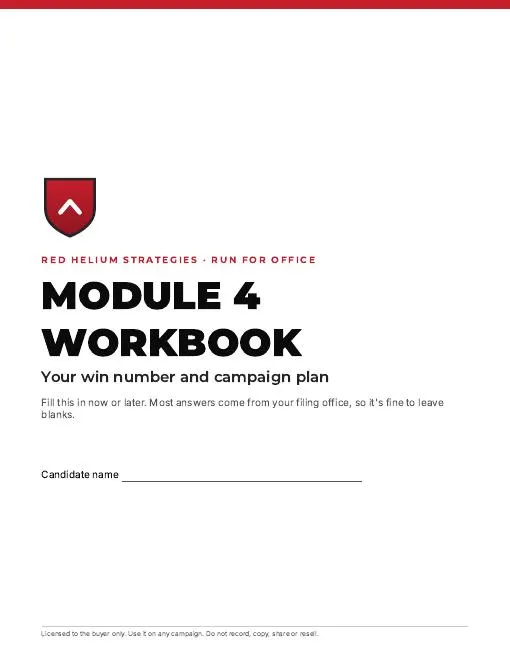
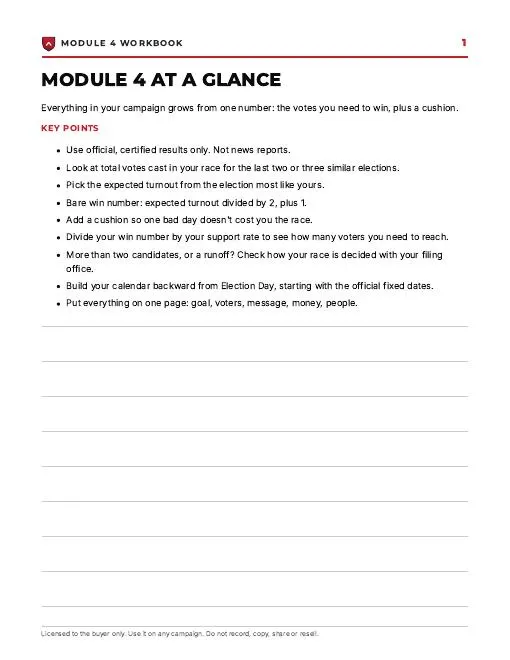
- Find your win number and build a week-by-week campaign plan
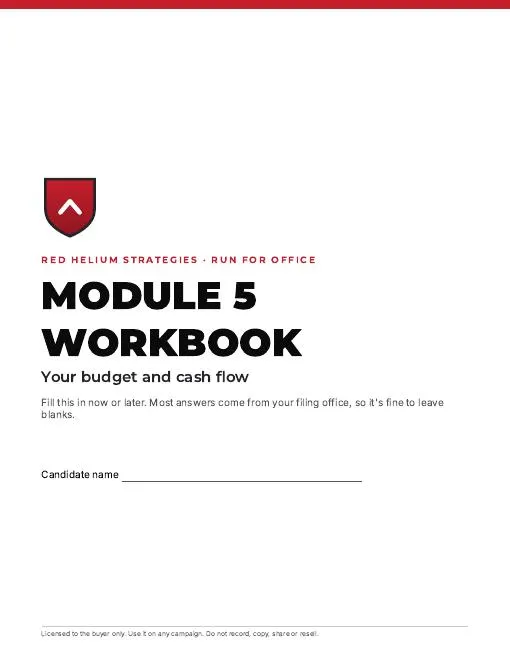
- Build a budget from real quotes and a cash flow plan
- Raise the money: friends and family, call time, events, mail and online
- Nail your message and your story, and handle attacks
- Reach voters at the door, by mail, online and in the press
- Build your get-out-the-vote and Election Day plan
What's included
- 13 video modules, each with a slide deck and a fill-in workbook
- One sample candidate, Jordan Avery, followed through every step
- A working campaign plan by the end, not just notes
The course
13 modules, filing to Election Day
Get on the ballot
Your treasurer, bank account and money basics
Your win number and campaign plan
Budget and cash flow
Fundraising
Message, story and handling attacks
Voter contact
Volunteers
Mail, print and signs
Digital and social
Press, forums and debates
GOTV, election day and after
Who this is for
How to run for city council
Use the course to plan a city council race from filing to Election Day. See also our city council guide.
How to run for school board
School board races are local and often low turnout. Your win number and voter contact plan matter most.
How to run for county commissioner
County races need a real budget and a field plan. Modules 4 through 9 walk you through both.
How to get on the ballot in your state
Module 2 shows you what to look up and who to ask, so you don't miss a filing deadline.
Campaign treasurer requirements
Module 3 covers choosing a treasurer and setting up your bank account and reports. Requirements vary, so check with your election office.
Rules differ by state and office. Confirm the details with your election office or counsel. This isn't legal advice.
Pricing
Start free. Unlock the full course when you're ready to run.
Module 1 is free. The full course is $250, one time.

Full Course
$250 one time
- 13 video modules, each with a slide deck and a fill-in workbook
- One sample candidate, Jordan Avery, followed through every step
- A working campaign plan by the end, not just notes

The Campaign Room
$29 per month
- Ballot, Plan and Budget, and Social Media guides free
- Half off the fundraising guide
- Monthly live Q&A, questions submitted ahead
Questions
Who is this course for?
First-time candidates for local and state office, and anyone deciding whether to run.
Is any of it free?
Yes. Module 1, "Should you run, and who runs it with you?", is free.
What do I get with the full course?
13 video modules, a slide deck and fill-in workbook for each, and a working campaign plan by the end.
Does it cover my state's rules?
Rules differ by state and office. The course shows you what to look up; confirm the details with your election office or counsel. This isn't legal advice.
Rules differ by state and office. Confirm the details with your election office or counsel. This isn't legal advice.