
Shop · The Get-on-the-Ballot Kit
Don't Let Paperwork End Your Campaign Before It Starts
You decided to run. Now comes the part nobody warns you about: the forms, the deadlines, the signatures and the office you're supposed to file with. This kit walks you from "should I run?" to "I filed it right," step by step, in plain words. Built for first-time candidates.
$39, one-time. Instant download.
A note from Josh
"I founded Red Helium Strategies in 2018. The quietest way to lose a race is on paperwork: the wrong office, a late form, a petition that gets thrown out. Most first-time candidates don't find out until it's too late. I built this kit so you file right the first time. Josh Gibbons"
The problem
Running for office starts with paperwork, and the paperwork is confusing. Every place does it a little differently. First-time candidates run into the same walls:
- You don't know which office you file with. Your filing office could be the city clerk, the county election office or the secretary of state. Confirm which one before you file. Plenty of candidates show up at the wrong counter.
- Deadlines sneak up. Filing windows can be short, and some open and close months before election day.
- Petitions get thrown out. A signature from someone outside your district, a missing line or a sheet filled out wrong can all be challenged.
- Money rules start early. In many places you need a committee, a treasurer and a separate bank account before you raise or spend a dollar.
What it costs to get it wrong
This is where races end before they start. Miss a filing deadline and your name may not be on the ballot. Turn in too few good signatures and you can be knocked off. Raise money before your committee is set up and you may spend your first weeks fixing it instead of meeting voters. None of these are about your ideas or how hard you work. They're about forms. And they're avoidable if you know what to ask, and when.
The fix
The Get-on-the-Ballot Kit gives you the order of operations. It tells you what to do first, what to ask your filing office, and what to check before you hand anything in. It doesn't guess at your state's rules. It shows you how to get the official ones and turn them into your own plan, with worksheets that keep you on track.
It won't promise you a spot on the ballot. Nobody honest can. It helps you file right and plan ahead, so the paperwork isn't what stops you.
Who it's for
First-time candidates running for city council, school board, mayor, state legislature or statewide office.
- Anyone thinking about running who doesn't know where to start
- Candidates who want a clear filing plan instead of a pile of browser tabs
- Anyone running with no experience and no staff
Who it's not for
- Congressional or other federal races
- Anyone looking for legal advice. This is guidance. Your state's rules and your filing office come first.
What's inside, and what each piece saves you
A 21-page PDF guide in 6 chapters, from deciding to filed:
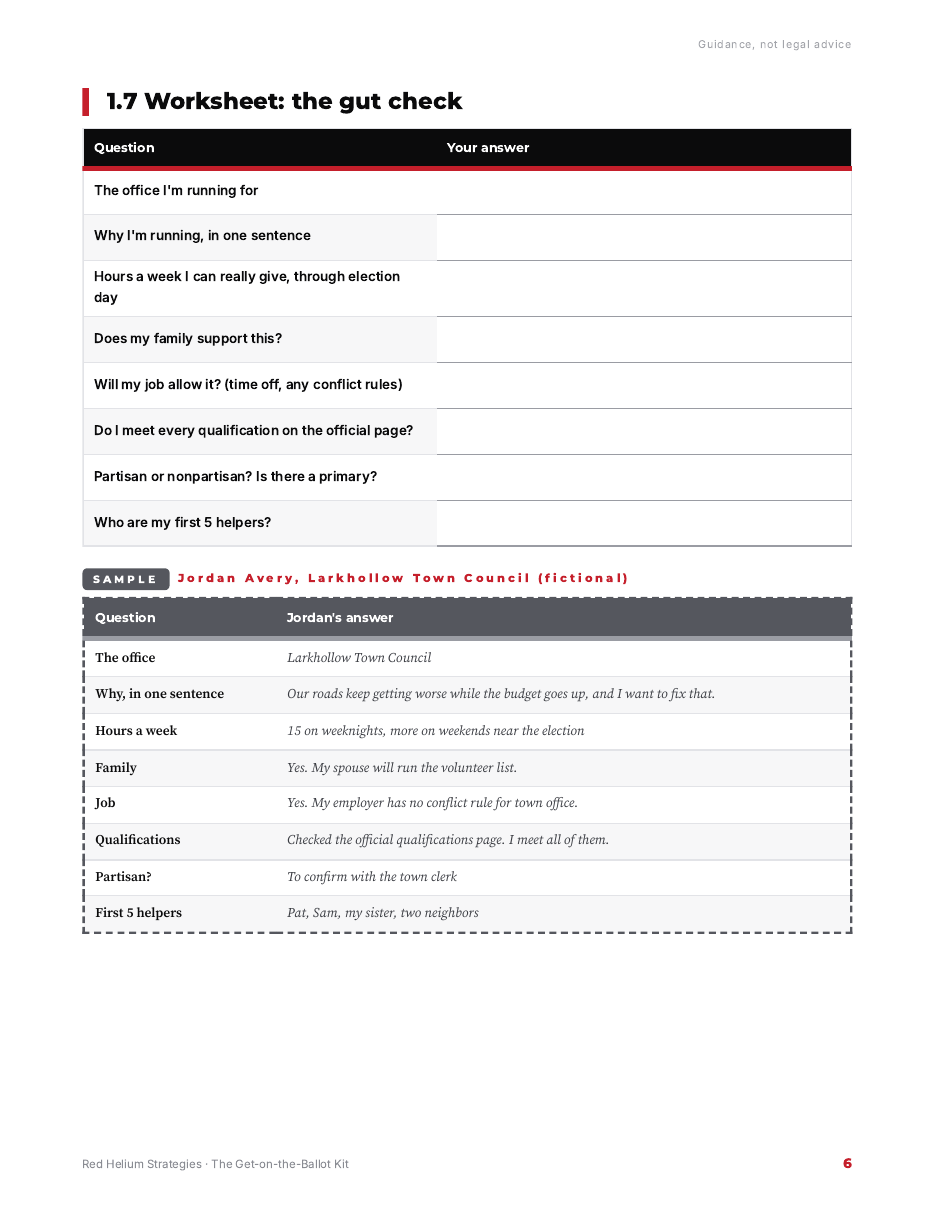
- Should you run? What offices you can run for, how to check the requirements for your seat, partisan or nonpartisan, and how to run with no experience. Ends with a gut-check worksheet. Saves you from committing to the wrong race, or finding out late that you don't qualify.
- Find your filing office and calendar. Who handles your race, how to get the official candidate guide, and a worksheet to write down your office and dates. Saves you from the wrong counter and the missed window.
- Form your committee before you raise or spend. Why it comes first, who can be your treasurer, how to open a campaign bank account, and your committee name and paid-for-by line. Saves you from money mistakes you'd have to clean up later.
- Get on the ballot: fee or petition. How to find out which one applies, where to get the real signature number, rules that keep signatures from getting tossed, why to collect extra, how to check your own sheets, petition challenges and where to gather. Saves you from turning in petitions that don't hold up.
- File it right. A filing checklist, why to file early and in person if you can, and what you owe after you file. Saves you from a last-minute scramble and from missing the reports that start after filing.
- Your first 30 days. A starter budget, your announcement plan, your first contact list, and a 30-day worksheet. Saves you from filing and then wondering what to do next.
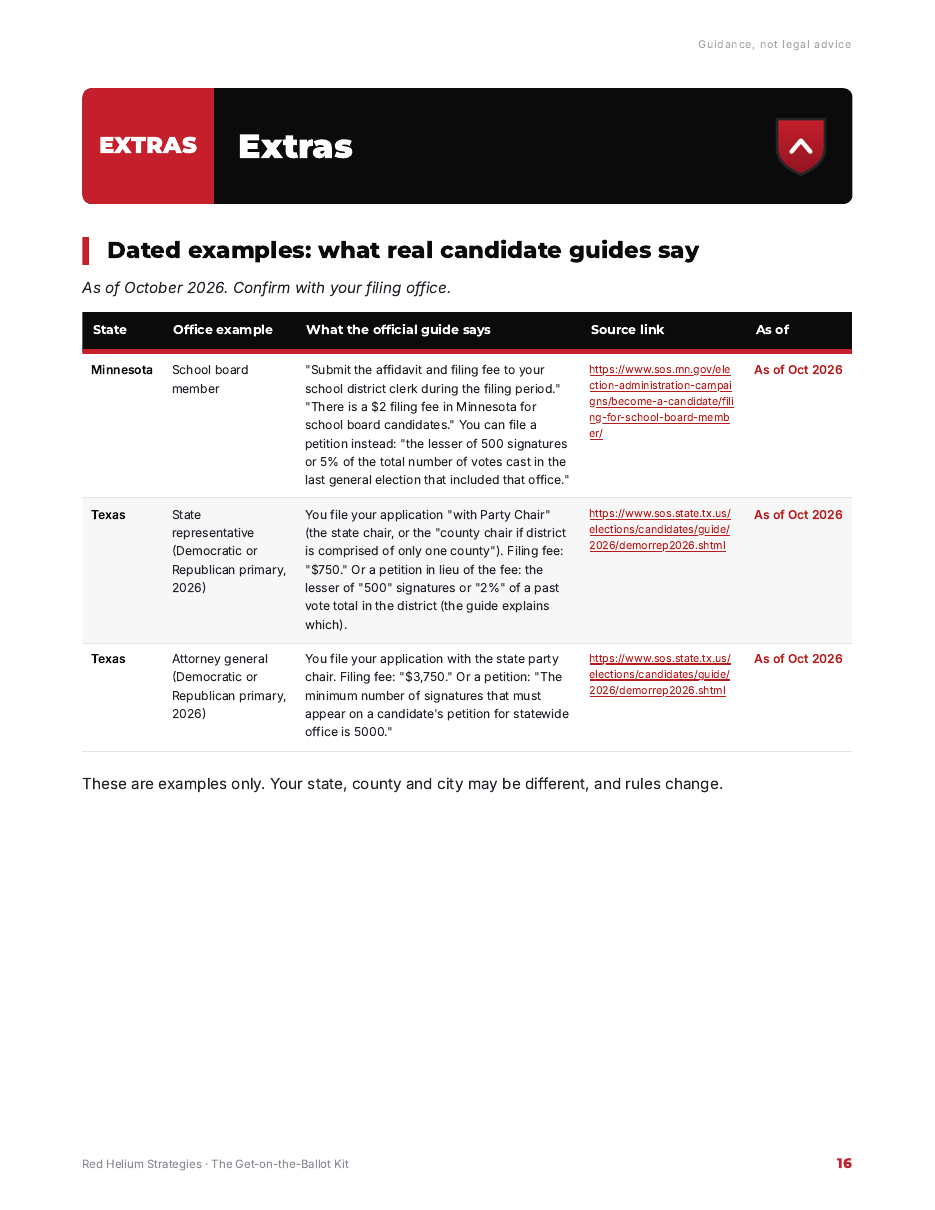
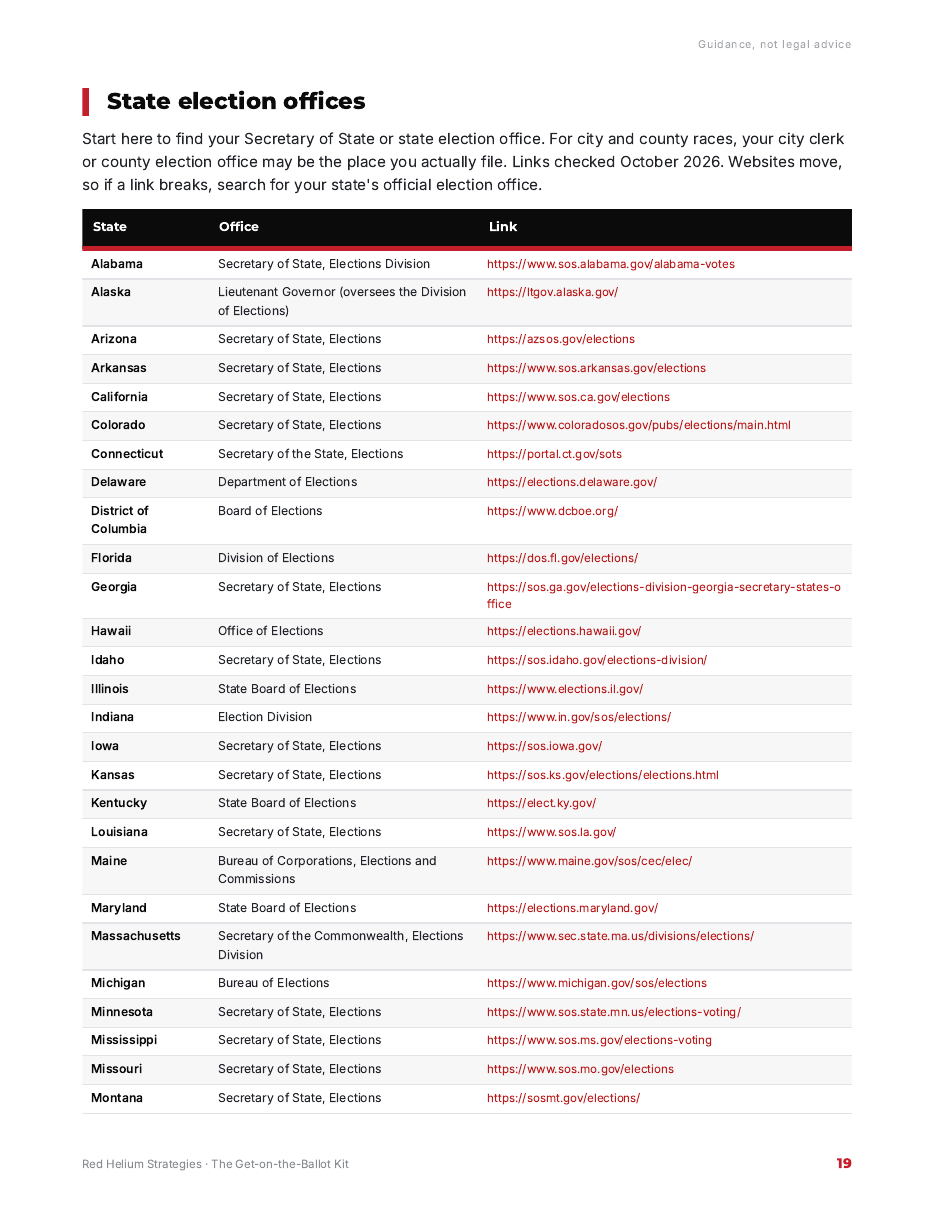
Plus: - Links to every state's official election office, so you start at the real source. Saves you hours of searching. - Dated examples from official candidate guides, clearly marked, so you can see what real guides look like. Saves you from guessing what to look for. - A printable checklist to track every step. Nothing falls through the cracks. - A one-page calendar to fill in with your official dates. Your deadlines in one place. - One made-up candidate throughout, Jordan Avery for Larkhollow Town Council, so you can see what a finished worksheet looks like. No staring at a blank form.
See inside
Why Red Helium
Josh Gibbons founded Red Helium Strategies in 2018. Josh was named Canyon County Hall of Fame, Republican of the Year, 2023.
This kit is the filing playbook laid out so you can run it yourself. It teaches you what to ask and where to look, so you know the process, not just a checklist.
What it's worth
You could hire a consultant to walk you through filing. That's real money, and for a first local race it's often more than the budget allows. You could also try to piece it together from government websites on your own, which can eat nights and weekends and still leave you unsure.
This kit sits in between: the steps, the questions and the worksheets, for less than the cost of a dinner out. If it keeps one form from going in wrong, it has done its job.
Price: $39
FAQ
What are the requirements to run for city council? They depend on your city and state. Common ones are a minimum age, living in the city or district for a set time, and being a registered voter. The kit shows you where to find the official list and gives you a checklist.
How many signatures do I need? It depends on your state, city and office, and some places use a fee instead. We don't print numbers because a wrong one can keep you off the ballot. The kit tells you what to ask your filing office and why to collect extra.
Which office do I file with? Your filing office could be the city clerk, the county election office or the secretary of state. Confirm which one before you file. Chapter 2 walks you through finding it.
Will this get me on the ballot? It can't promise that. Only your filing office decides. What it does is help you file right, on time and in the right place.
Will this work in my state? The steps work for city council, school board, mayor, state legislature or statewide office. Deadlines, fees and signature rules change from place to place, so the kit tells you what to ask and links you to your state's official election office.
Is this legal advice? No. It's guidance. For legal questions, talk to your secretary of state, local election office, city clerk or a lawyer.
How much does it cost to run? Chapter 6 has a starter budget for your first 30 days. Raising the money is covered in The Complete Campaign Fundraising Guide.
Can I run with no experience? Yes. Most first-time candidates have never run for anything. This kit handles the paperwork side.
What format is it? One zip file with the 21-page PDF guide, including the worksheets, printable checklist and one-page calendar.
How do I get it? Buy with the button below. You'll get your download link after checkout.
Get the kit
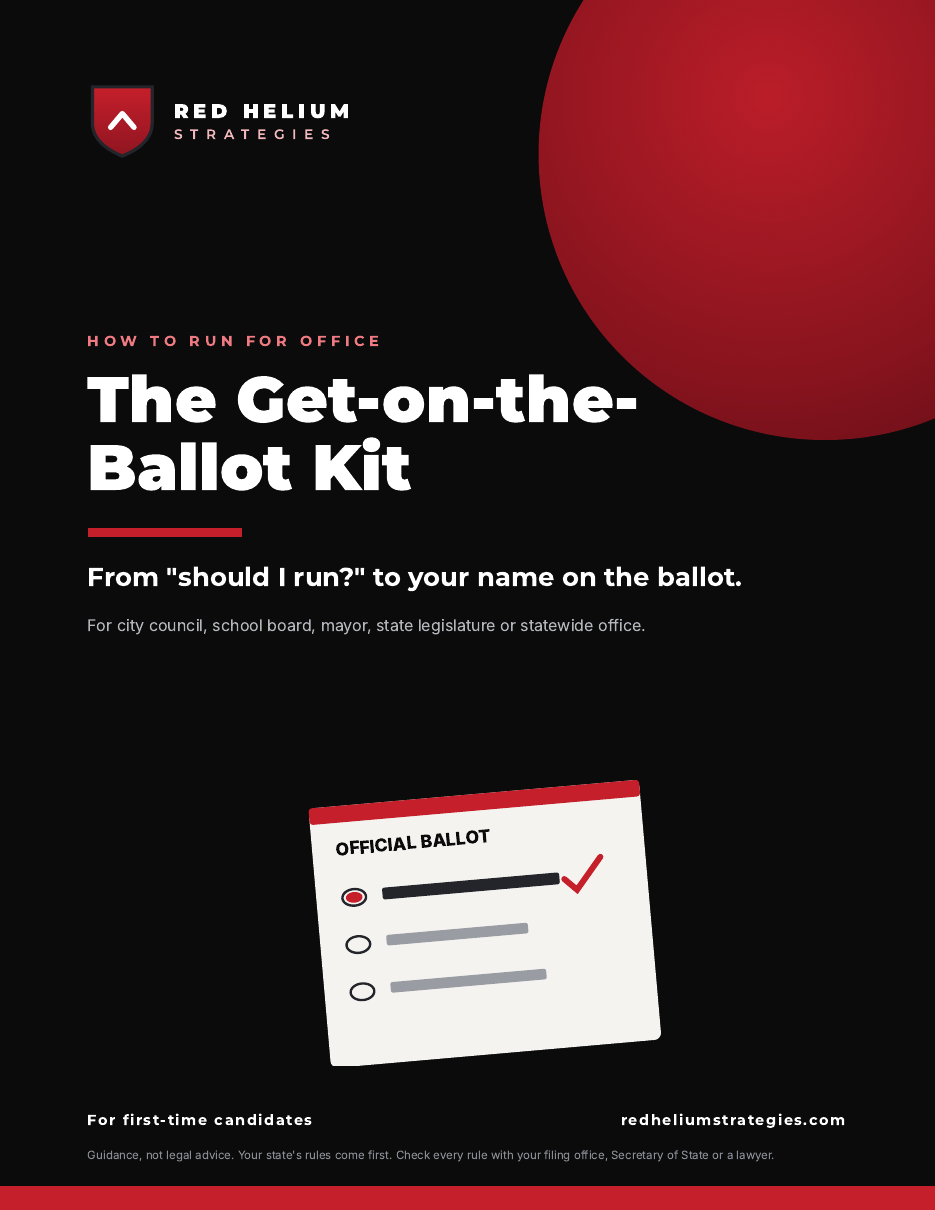
How to Run for Office: The Get-on-the-Ballot Kit File right the first time. 6 chapters, worksheets, a printable checklist and calendar, and links to every state's election office.
Price: $39
Next step: raise the money with The Complete Campaign Fundraising Guide. Want us to do it for you? Talk to Red Helium.